I worked on Avatar 3: Fire & Ash over the course of 12 months as a Sequence Turnover Artist. The Turnover team serves as the last department within Lightstorm's pipeline before handing off shot packages to Weta FX where the scene is rebuilt for full visual effects production. I regularly used Maya, Motion Builder, Nuke, Shotgrid, and RV during this production.
My role involves making final adjustments shots within shots before they are "turned over" to Weta FX. Over the course of my time on the production I had worked on 332 shots across the entire movie. Many of my daily tasks included finaling virtual camera data, cleaning up motion capture performance data, and addressing conform notes received from editorial (blocking, staging, environment composition, etc.)
I go more into detail about each of these tasks below.
My role involves making final adjustments shots within shots before they are "turned over" to Weta FX. Over the course of my time on the production I had worked on 332 shots across the entire movie. Many of my daily tasks included finaling virtual camera data, cleaning up motion capture performance data, and addressing conform notes received from editorial (blocking, staging, environment composition, etc.)
I go more into detail about each of these tasks below.
SCENE, CHARACTER, & CAMERA ADJUSTMENTS
My job is to make sure everything within a scene is organized, accurate to editorial's latest cut, and delivered correctly to Weta FX. Each shot that I am assigned comes with a list of notes from editorial that informs me on what I am responsible for correcting. There are hundreds of different notes that could attached to any given shot, and each requiring a different workflow and tools to accomplish the task. Not only do you have to be a very quick learner, but it's essential to stay organized with your notes on this production. For example, running into a niche issue that took a lot of effort to resolve may come back and become a problem again on a different shot months later. It's always important to be keeping track of errors and the methods used to fix them. While there are hundreds of tasks that could be assigned to a given shot, the majority of notes I received can be boiled down to either a scene, character, or camera adjustment.
For characters, this could be changing out a character's motion capture, replacing or offsetting a character's facial capture, replacing a character's costume for shot continuity, and even in some cases reanimating characters manually. After any changes are made, it is necessary to run scripts to ensure any changes I made haven't visually affected any unrelated elements in the shot. Finally, after rendering a quality check is performed by comparing my outputted render to the previous render to check if the changes made are accurate to editorials notes for the shot.
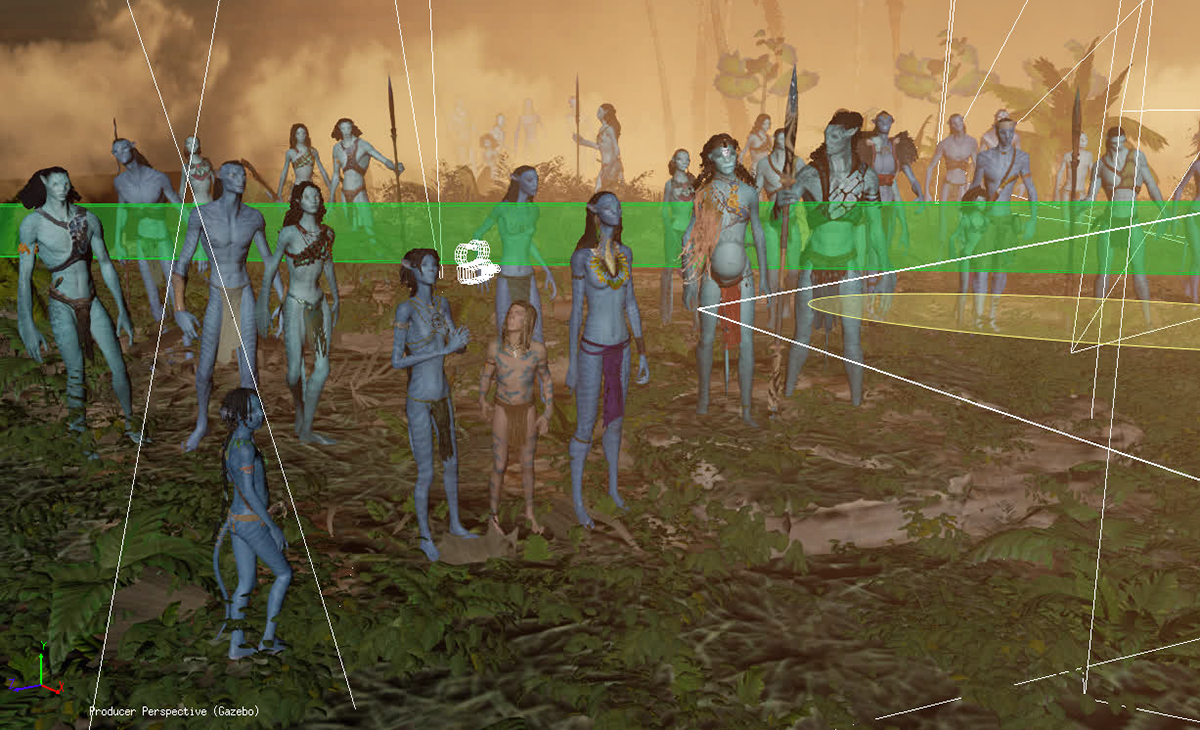
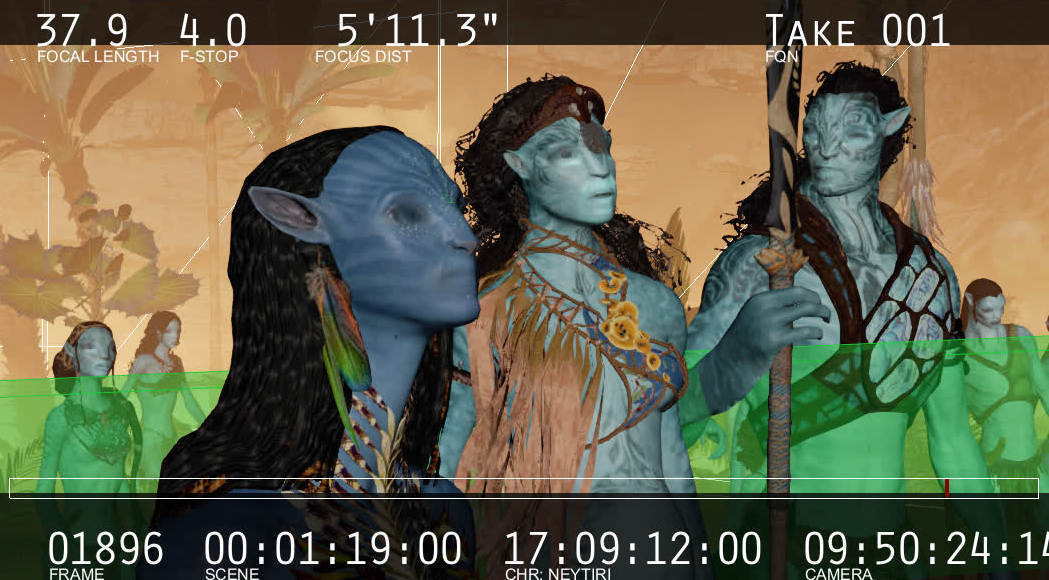
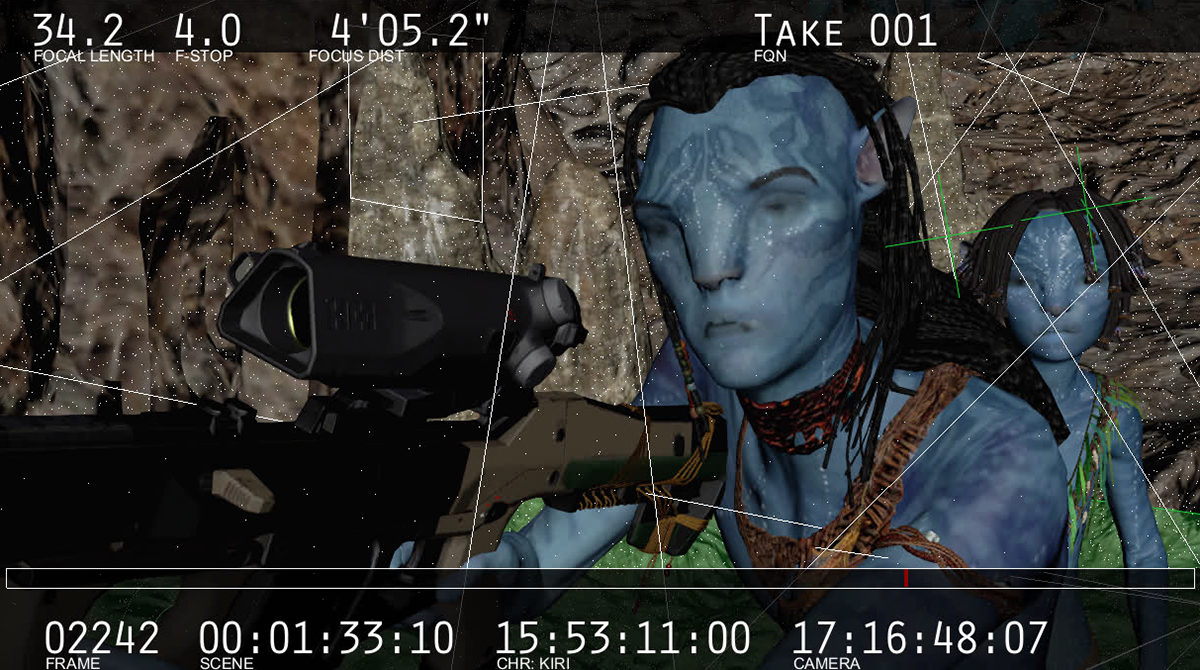
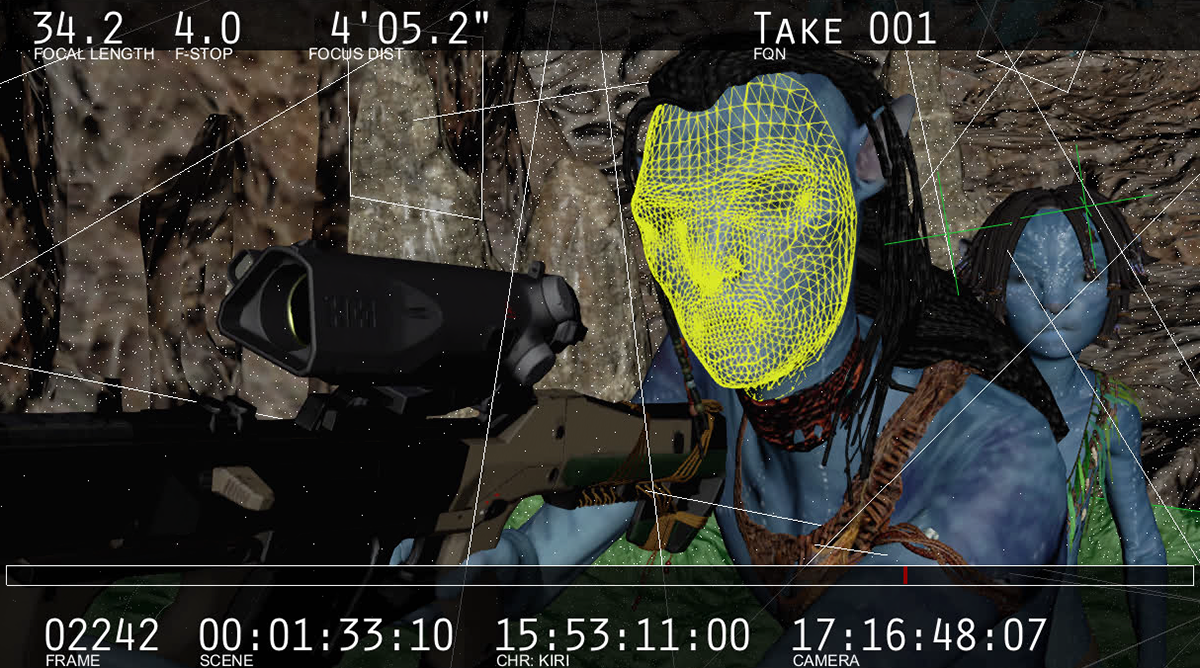
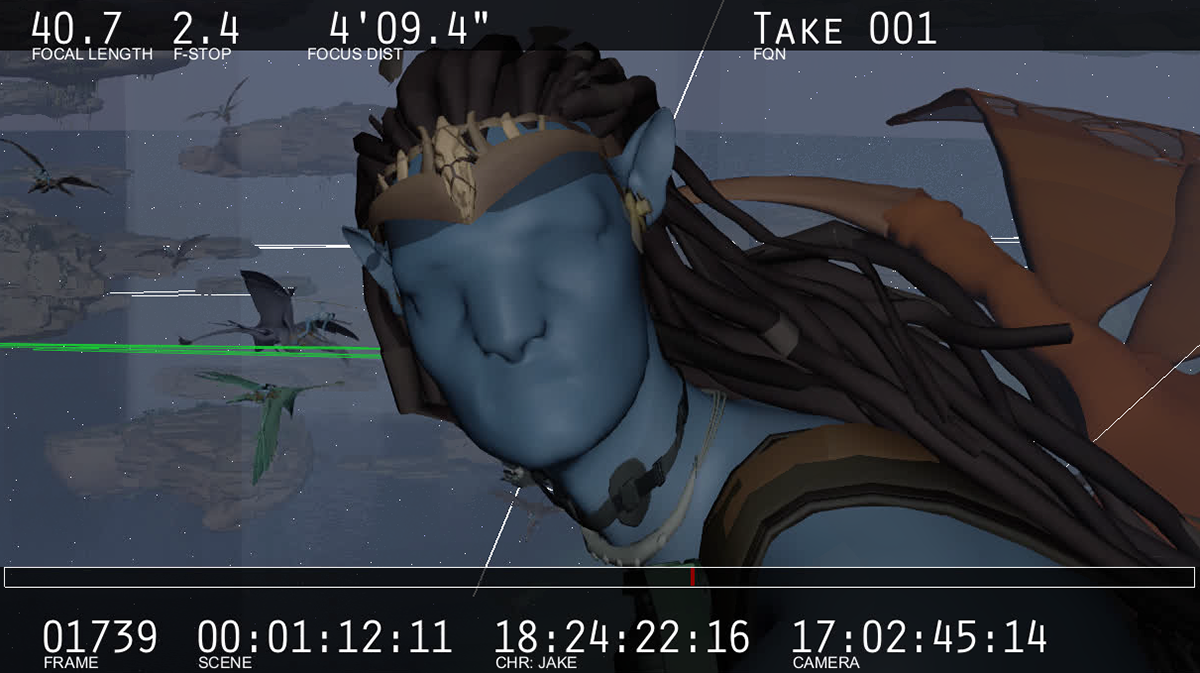
In the images shown below, you may get a better idea of the amount of character and motion capture data that is packed into certain scenes. It's not uncommon for a small adjustment in one area to inadvertently affect another character or background element without realizing. This is what makes the quality check and integral step before sending the shot package to Weta FX for visuals effects.
For characters, this could be changing out a character's motion capture, replacing or offsetting a character's facial capture, replacing a character's costume for shot continuity, and even in some cases reanimating characters manually. After any changes are made, it is necessary to run scripts to ensure any changes I made haven't visually affected any unrelated elements in the shot. Finally, after rendering a quality check is performed by comparing my outputted render to the previous render to check if the changes made are accurate to editorials notes for the shot.
In the images shown below, you may get a better idea of the amount of character and motion capture data that is packed into certain scenes. It's not uncommon for a small adjustment in one area to inadvertently affect another character or background element without realizing. This is what makes the quality check and integral step before sending the shot package to Weta FX for visuals effects.
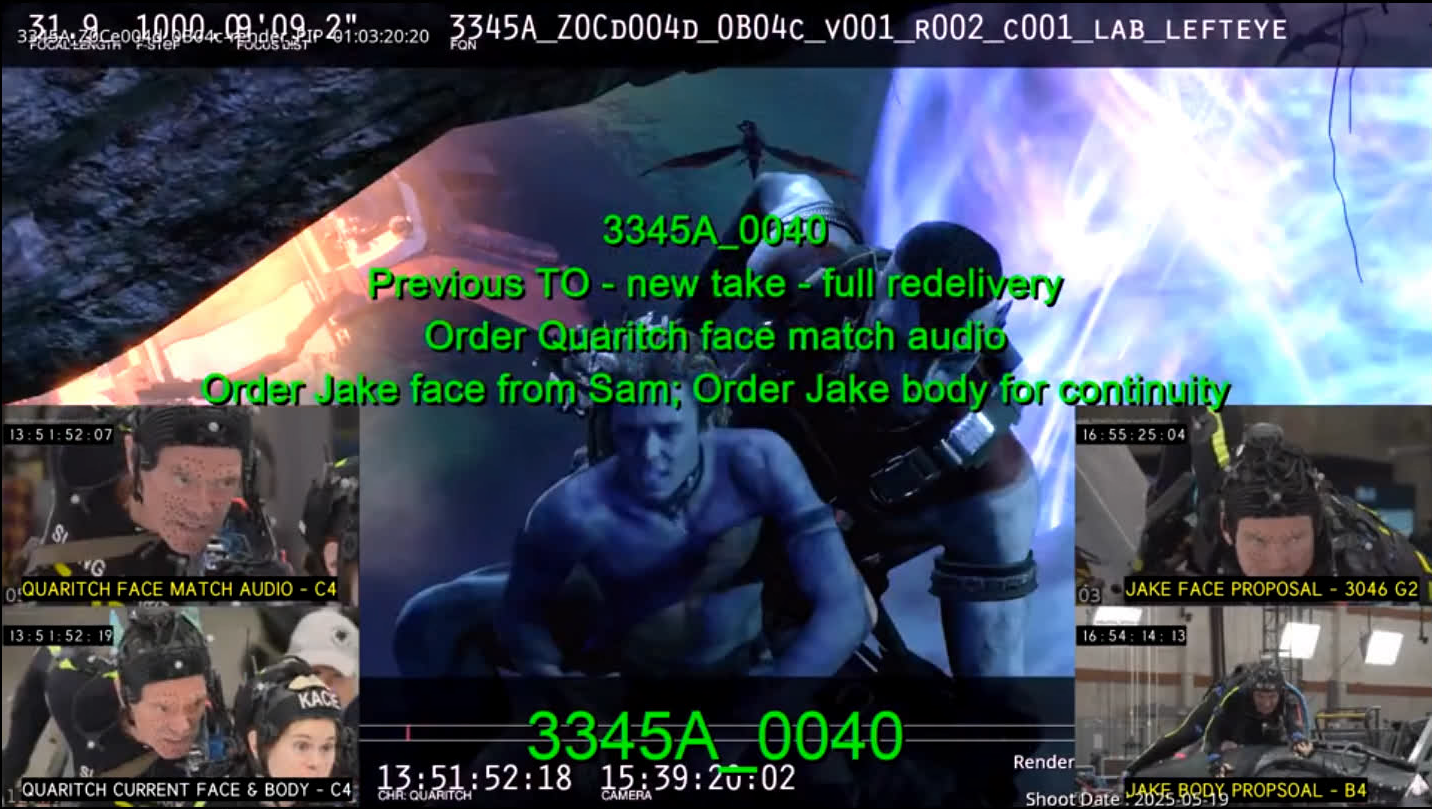
An example of a conform task from editorial, listing notes and live footage as reference.
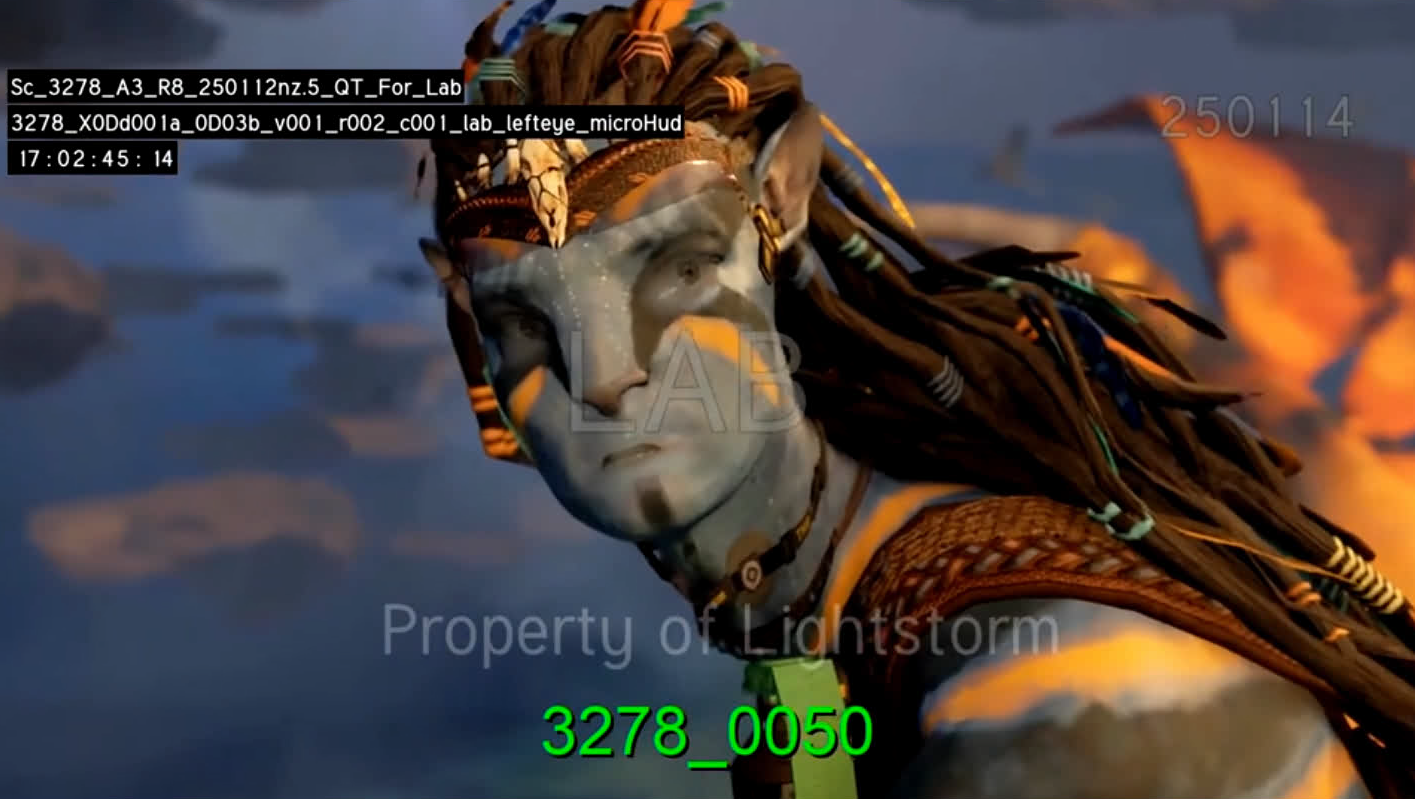
KABUKI FACE MASKS
NUKE
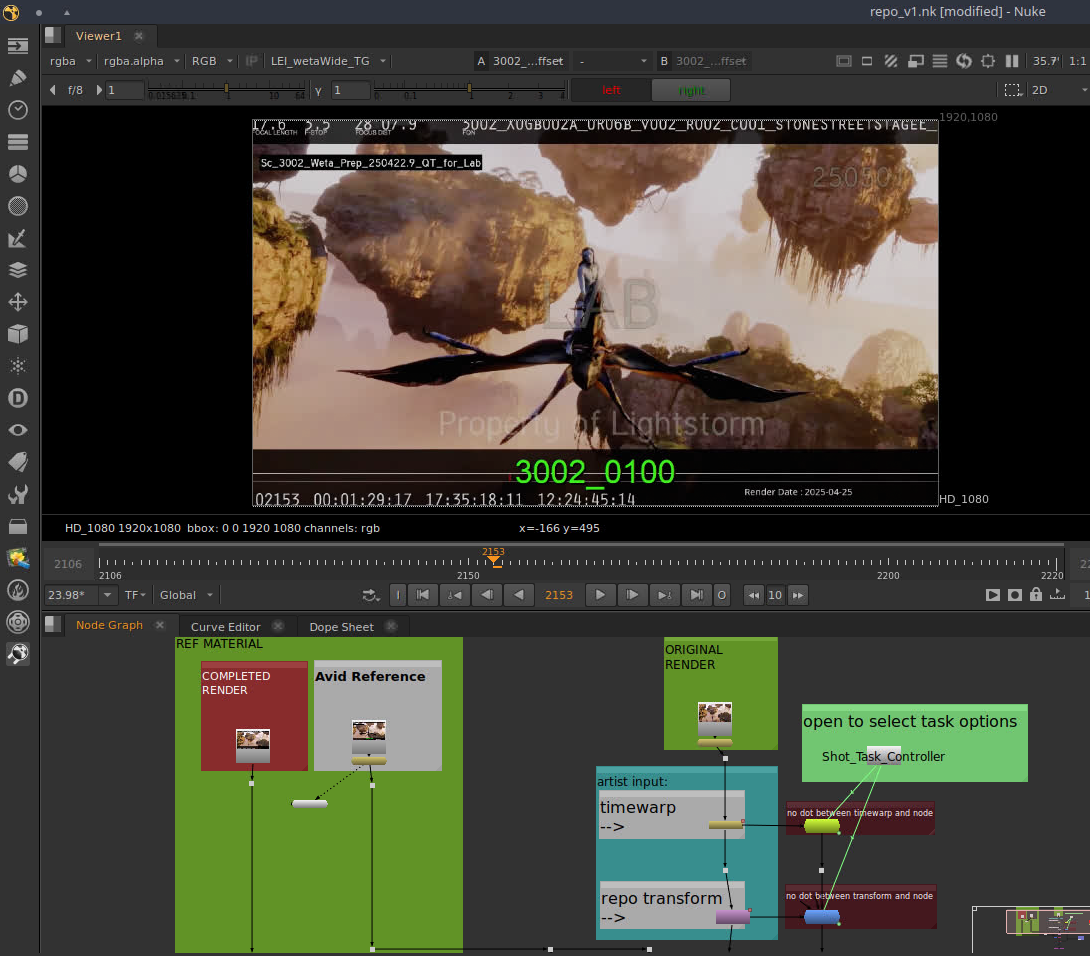
Nuke was regularly used for finaling and retiming virtual camera data. Production sends an edited editorial cut of a shot and I match these edits within nuke by keyframing the X and Y transforms to exactly match the visual changes made. These values are then converted to virtual camera data and applied within Motion Builder to exactly match the intended visual change.